An AI Assistant in an Aesthetic Clinic: What It Does, and What It Doesn't
AI for aesthetic clinics is neither science fiction nor a machine that diagnoses in your place. Inside a clinic, an AI assistant is first and foremost a tireless administrative colleague: it listens, drafts, sorts, follows up and prepares, while you keep your hands on everything that touches the patient. That operational reality -- not the marketing promises -- is what this pillar article breaks down, task by task, across a real clinic day.
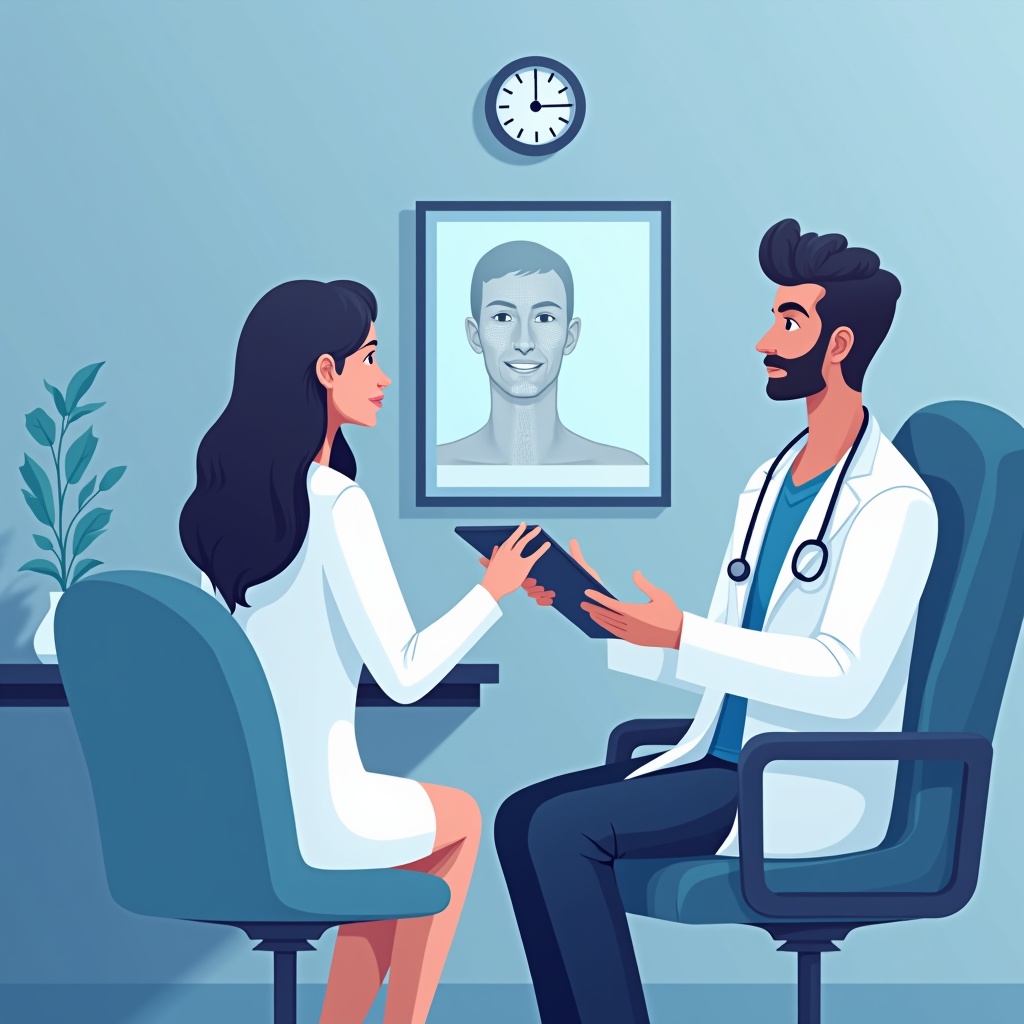
Let's start with the boundary, because it frames everything else. A serious AI assistant performs no medical act and makes no clinical decision: it does not prescribe, does not set an indication, and replaces neither your examination nor your judgment. It proposes, you validate. That is exactly the logic of an AI layer like Jarvis, the Nextmotion AI: it guides the team and triggers concrete tasks, but the human always keeps the final word.
That human oversight is not a comfort feature. In its landmark report on the ethics and governance of artificial intelligence for health, the World Health Organization makes it a guiding principle: an AI system must remain under human control, all the more so when it touches health. In aesthetic medicine, that translates simply: the AI prepares the work, the clinician decides.
A Typical Day With an AI Assistant, Task by Task
The clearest way to understand AI in aesthetic medicine is to follow a clinic day, from the first inbound enquiry to the last post-treatment check-in. Here, hour by hour, is where the AI actually steps in -- and what every one of these tasks has in common: they are administrative tasks, never medical ones.
8 a.m. -- the schedule and no-shows
The day opens with the diary. An AI assistant sends appointment reminders automatically, adapting the channel and timing, and coordinates rooms, machines and practitioners so slots don't collide. The result: fewer forgotten appointments, better-held occupancy, and a team that no longer spends its morning chasing confirmations. That is the job of the Nextmotion Agenda, which syncs natively with your existing booking calendar without double entry. To go deeper on this one area, see our dedicated guide to reducing no-shows.
9 a.m. -- enquiries arriving from everywhere
Website form, chatbot, Instagram, WhatsApp, phone call: booking enquiries land from all directions, and half get lost for want of a single place to hold them. An AI assistant gathers them into one lead queue, qualifies what can be qualified and, when the phone rings, pops the patient's record onto the screen. Calls can be recorded, transcribed and summarized -- or even handled by an AI voice agent during quiet hours. All of it lives in the Patient Relationship module: a single thread per patient, from first contact to follow-up.
11 a.m. -- notes and quote, during the consultation
This is where AI in the clinic is most visible. During the consultation, the AI listens to the exchange and produces a structured summary that you review before saving: you look at your patient, not your keyboard. Right after, it generates the quote -- treatment lines and prices proposed automatically -- which you adjust in one click before sending. This AI medical scribe deserves an article of its own; in the meantime, the full mechanics are laid out on the Nextmotion Consult page and in our piece on the digital consultation. On this single task, a clinic can save a meaningful amount of data-entry time per patient -- and, once again, the AI proposes, you validate.
2 p.m. -- before-and-after photos
The afternoon turns to procedures and their documentation. The AI does not press the shutter, but it makes the medical photo usable: once the shot is standardized (same framing, same light, colour calibration), it removes the background, blurs the eyes and adds your logo for a compliant before/after that's ready to publish. Because the protocol is locked in, the whole thing is 100% delegable to your assistants, and images are filed to the right patient rather than lost in a personal camera roll. It all happens in Nextmotion Capture, where processing a batch of photos takes minutes rather than the usual back-and-forth.
5 p.m. -- quote follow-ups and patient care
At the end of the day, the AI catches what usually slips through the cracks: it chases quotes that were sent but never signed, calls back patients on recurring treatments at the right moment, and schedules review appointments. A forgotten quote is revenue left on the table; an automated follow-up is patient retention that runs on its own. Clinique des Champs-Élysées, a group of 22 centres, sums up the effect: "We recovered tens of thousands of euros thanks to automatic follow-ups."
Compliance at Every Step: Health-Data Hosting, GDPR, Medical Confidentiality
Every task above handles health data -- the most sensitive category under the EU's General Data Protection Regulation (GDPR, Article 9). This is the non-negotiable filter on AI for aesthetic clinics: the question is not only "what does the AI do?" but "where does the data go, and who can reach it?" Responsible practice calls for hosting built to meet a recognized health-data standard -- in France, the HDS framework (Hébergement de Données de Santé, health-data hosting) defined by the national digital health agency (ANS) and certified by accredited bodies -- with data stored in Europe and a partitioned space per clinic.
Three safeguards are worth checking before you hand a task to an AI: the patient's consent to any recording of a consultation, respect for medical confidentiality, and control over where the data is hosted. The EU AI Act reinforces the point by requiring meaningful human oversight of AI used in sensitive contexts. In practice, an AI embedded in a controlled clinical software beats a consumer tool into which patient details would be pasted. We map out this territory in our guide to GDPR at Nextmotion and in the article on protecting patient data in aesthetic clinics.
AI in Aesthetic Medicine: Real Innovation or Just Hype?
It is a fair question: between the dazzling demos and the vague promises, how do you tell useful innovation from a gadget? The answer fits in one line -- the lasting value of an AI assistant is measured not by the "wow" of a demo, but by the administrative time it genuinely removes from your days. The clinics that get the most out of it treat it as a copilot -- notes, quotes, follow-ups -- and generally find it frees up meaningful administrative time each day, given back to care and to the patient relationship.
Hype is the tool that adds a layer of complexity without removing any: one more chatbot, one more data silo, an AI that answers but doesn't act. Useful innovation is the opposite: an AI that carries out concrete tasks inside the tools the clinic already uses. That is the stance of Jarvis, which is not a chatbot but an AI layer that guides and acts -- always under the clinician's control.
How Small Clinics Can Start Without Hiring or Overhauling Anything
Adopting AI in aesthetic medicine requires neither new hires nor a revolution. The right method is incremental: pick your single most painful friction point first -- often the before-and-after photos or the consultation notes -- deploy AI on that one task, measure the time saved, then expand. A brick-by-brick rollout works far better than a big-bang that makes the team dig in.
On budget, the Nextmotion Starter plan is €99/month excl. VAT with a 12-month commitment, and it is set up with Claude and the Nextmotion plugin (details on the pricing page). This "one task at a time" approach suits the solo physician as much as the small med spa that wants to modernize without recruiting. The key is to define your metrics before you start -- admin time per patient, no-show rate, quotes chased -- so you can put hard numbers on the return at one, three and six months.
FAQ: AI in Aesthetic Medicine
What is the role of artificial intelligence in aesthetic medicine?
Its role is administrative, not clinical. AI handles the repetitive work that surrounds care -- appointment reminders, centralizing enquiries, summarizing consultations, generating quotes, chasing unsigned quotes and follow-ups. It prepares and proposes; the practitioner examines, decides and acts. It never performs a medical act or makes a clinical decision.
Will AI replace aesthetic practitioners?
No. An AI assistant frees clinicians and front-desk staff from repetitive tasks, but it replaces neither the human relationship with the patient nor clinical judgment. In practice it gives time back -- so your team spends more of it with patients, where its value is greatest -- while the medical decisions stay firmly in human hands.
How can small medical spas get started with AI without hiring more staff?
Start with a single task -- usually before-and-after photos or consultation notes -- rather than an all-at-once overhaul. Deploy AI on that one workflow, measure the time saved, then expand brick by brick. The Nextmotion Starter plan, at €99/month excl. VAT with a 12-month commitment and set up with Claude and the Nextmotion plugin, lets a small clinic modernize without recruiting (details on the pricing page).
What guarantees apply to hosting and patient data with an AI assistant?
Health data should be hosted on infrastructure built to meet a recognized health-data standard (in France, the HDS framework), stored in Europe, in a space partitioned per clinic that stays under your control. Also verify consent to any recording, respect for medical confidentiality and GDPR compliance (Article 9) before handing a task to the AI. A consumer tool into which patient details are pasted meets none of these criteria.
Move to AI That Actually Saves You Time, Not One More Gadget
A well-designed AI assistant does not try to replace the clinician: it removes administrative friction so you spend more time with your patients, within a setup built for health-data compliance. That is precisely what Nextmotion designs for aesthetic clinics. Request a personalized demo and see, on your own typical day, what an AI assistant can genuinely take off your plate.